Books Like Babel
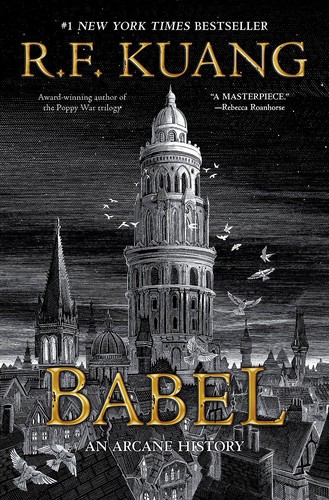
Want more dark academia with a conscience after R. F. Kuang's Babel? These picks share its elite schools, word-based magic, secret societies and hard questions about who knowledge serves.
Jim's Picks
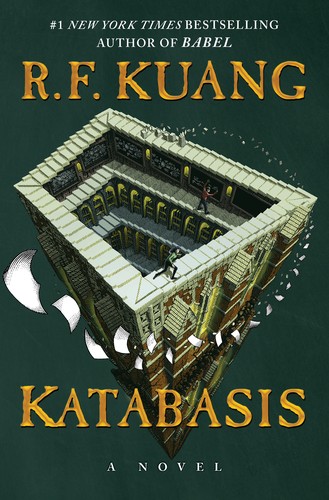
Katabasis
by R. F. Kuang

The Secret History
by Donna Tartt

A Wizard of Earthsea
by Ursula K. Le Guin

The Name of the Wind
by Patrick Rothfuss

Piranesi
by Susanna Clarke

The Dispossessed
by Ursula K. Le Guin

Things Fall Apart
by Chinua Achebe

The Lies of Locke Lamora
by Scott Lynch
Why Each Pick
- Katabasis by R. F. Kuang
- Kuang's own return to dark academia, this time at Cambridge. Graduate student Alice Law travels through Hell with her academic rival to bring back the soul of her dead advisor, and the underworld is built from logic puzzles and philosophy. It shares Babel's brainy magic and its anger at how institutions use people, but it is a satire of graduate school more than a novel about empire, and just as long at 541 pages.
- The Secret History by Donna Tartt
- The book that defined dark academia. A small circle of classics students at an elite Vermont college fall under the spell of their teacher and Greek ideals of beauty, until they cross a terrible line. Like Babel, it follows an outsider welcomed into a brilliant, closed world that costs more than he understands. There is no magic, and the crime is revealed on page one, so the tension comes from why rather than what.
- A Wizard of Earthsea by Ursula K. Le Guin
- For magic that runs on language. On the island of Roke, young Ged learns at a school of wizardry where power comes from knowing the true names of things, an idea close to Babel's silver bars and the gap between words. Le Guin's book is far shorter, at 183 pages, and more fable than argument: Ged's enemy is a shadow his own pride released, not an empire.
- The Name of the Wind by Patrick Rothfuss
- For a poor, gifted student fighting his way through a legendary university. Kvothe talks his way into a school of magic where his tuition, his rivals and his secrets all threaten to undo him, much as Robin's place at Babel is never secure. Rothfuss builds a rule-bound magic system with the same love of detail, but the story is a personal adventure rather than a political one, and the trilogy is unfinished.
- Piranesi by Susanna Clarke
- For a scholar's obsessive notes on an impossible world. Piranesi records the tides and statues of an endless house in careful journals, until messages suggest someone has been keeping the truth from him. It shares Babel's love of learning and its slow discovery that knowledge is being used against the person who gathers it. It is short, strange and gentle, at 272 pages, with none of Babel's violence.
- The Dispossessed by Ursula K. Le Guin
- For a brilliant scholar whose work powerful people want to own. Physicist Shevek leaves his anarchist moon for a wealthy, unequal planet to share his theory, and has to ask who will profit from it. Like Babel, it is a novel of ideas about scholarship, power and freedom. Le Guin writes science fiction rather than fantasy, and the conflict is philosophical, told across two timelines, rather than revolutionary.
- Things Fall Apart by Chinua Achebe
- For the other side of the empire Babel's translators serve. In pre-colonial Nigeria, the proud warrior Okonkwo watches his Igbo village change as European missionaries and colonial rule arrive. Babel argues about colonialism from inside Oxford; Achebe shows it from the village it reaches. It is a short classic at 209 pages with no fantasy at all, and it hits as hard as Babel's final act.
- The Lies of Locke Lamora by Scott Lynch
- For readers who liked the secret society and its thefts. Locke Lamora and his gang of con artists rob the nobility of a Venice-like city while hiding in plain sight, a double life Robin would recognize. It shares Babel's sense of a hidden world under a grand city, but it is a fast, funny heist fantasy with no lectures, though the violence gets brutal later on.
What to Read After Babel
For more of Kuang's dark academia, Katabasis is the obvious next step. The Secret History is the classic of the genre, and The Name of the Wind and A Wizard of Earthsea suit readers who loved studying magic at a great school. Susanna Clarke's Jonathan Strange & Mr Norrell, an alternate nineteenth-century England full of footnotes, is often compared with Babel, though it isn't in Jim's library yet.
If Babel's argument about empire stayed with you, read Things Fall Apart next. The Dispossessed takes on knowledge and power through science fiction, Piranesi is the gentlest pick, and The Lies of Locke Lamora is pure caper.
Tone and Content
Babel is long, dense and grim by the end, and so are Katabasis and The Secret History, which turns on a killing. The Lies of Locke Lamora has graphic violence under its jokes. Piranesi and A Wizard of Earthsea are the shortest and gentlest books here.